Mick McQuaid
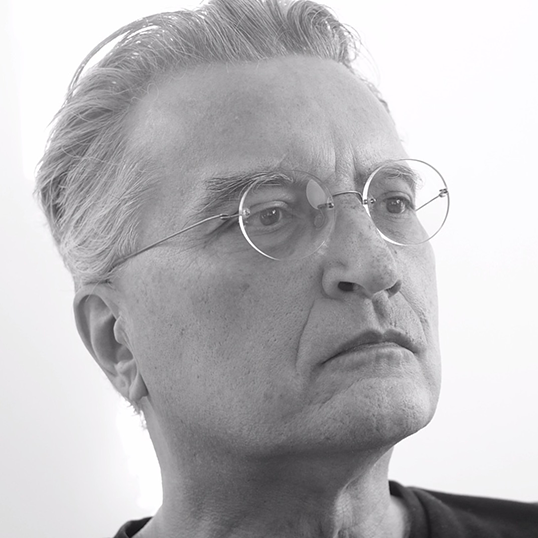
I am an Associate Professor of Instruction at UT-Austin, where I am also the Director of Master's Studies for the iSchool, as well as Graduate Advisor, and Subject Area Advisor for interdisciplinary studies.
Humble Em Dash
26 April 2026by Mick McQuaid
The humble em dash—a wonderful typographical device
Almost a year to the day—another blog post emerges! This one is devoted to the humble em dash—one of my favorite writing devices.
I first became acquainted with the em dash in the 1970s, when I became enamored of silent movies—their intertitle cards featured a profusion of em dashes, evoking the speech patterns of the players. I enjoyed the typography of the intertitle cards, including this mysterious, sophisticated long hyphen-like construct.
In the 1980s, I learned TeX, which allowed me to include em dashes in my writing by the simple expedient of typing three hyphens in a row—automatically converted to em dashes when my files were converted to PostScript. TeX also allowed me to insert en dashes by typing two hyphens and the manual even explained their purpose—to separate items in a series, such as 1974–2026, the period in which I have enjoyed the em dash.
During the nineties, I switched to LaTeX—a layer on top of TeX—with the same typographical niceties but less manual effort at writing macros. By this time, I was no longer printing everything out and my use of PostScript was replaced by PDF.
By the mid 2000s, I discovered markdown and, eventually, pandoc, which allowed me to convert markdown files into LaTeX and still use em dashes along with other features of LaTeX but with even less manual effort for most writing devices.
In the late teens, I switched briefly to Xaringan and eventually Quarto, as systems that integrated the markdown–pdf workflow, using pandoc and LaTeX and even YAML and JavaScript for slideshows—all simplifying the writing process while not abandoning the relatively bug-free component tools I had come to rely on.
That brings us the twenties—a time when I am accused of offloading my writing to AI because it is replete with em dashes! I beg to differ. I have put hundreds of pages of em dash ridden pdfs on the web, and I like to think that they constitute a tiny but influential part of the grist for the AI mill. It is AI imitating me—not me using AI! Although I use AI extensively for coding, especially debugging, and have dabbled in AI for administrative tasks, I have yet to rely on it for writing. I think I’m just too used to doing my own writing.
Now, admittedly, I’ve overused em dashes in this post—all to make a point, but I do want to encourage writers to use them rather than shying away from them as evidence of AI interference. Please don’t consign em dashes to the graveyard of AI writing—use them enthusiastically!
edit: I see that Jekyll has failed to convert my double and triple hyphens to en dashes and em dashes! I’m puzzled and disappointed. I will investigate.
further edit: I discovered that I was using markdown: GFM instead of markdown: Kramdown in my _config.yml file. By switching to the latter, I got the desired behavior.